

Invoice OCR vs AI Extraction: Breakthrough Accuracy in Document Processing
How AI Invoice Extraction Revolutionizes Document Accuracy Rates
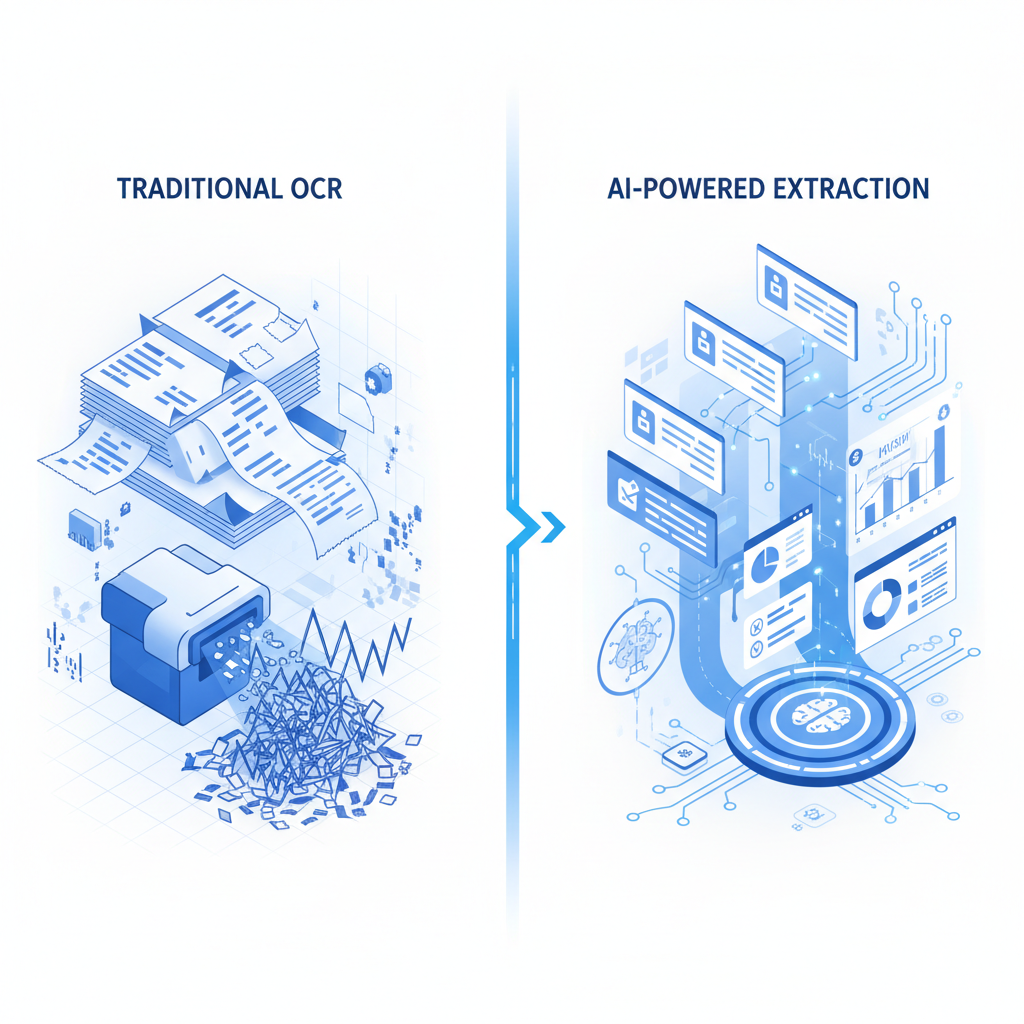
Traditional invoice OCR and modern AI extraction produce vastly different accuracy rates because they use fundamentally different approaches to understanding documents. While basic OCR invoice processing simply converts pixels to text (often hitting 70-85% accuracy), AI extraction actually understands invoice structure and context—which is why multi-model AI systems can achieve 99%+ accuracy.
For CFOs and controllers, this accuracy gap directly impacts:
- Exception handling costs
- Vendor relationship management
- Time spent correcting data entry errors
Let me walk you through exactly why these accuracy differences exist and what they mean for your accounts payable operations.
Understanding Traditional Invoice OCR Limitations
Optical Character Recognition (OCR) has been around since the 1970s, with core technology that hasn't changed dramatically. Invoice OCR works as pattern recognition—essentially a very fast typist who can read documents without truly understanding them.
Key OCR Extraction Challenges:
- Poor scan quality: Faded text and low-resolution scans disrupt character matching
- Handwritten annotations: Non-standard text completely throws off recognition
- Complex document layouts: Multi-column formats often jumble text extraction
- Unusual fonts: Stylized logos create significant reading errors
Research from AIIM reveals that basic OCR typically achieves only 60-85% accuracy. For a business processing 250 invoices monthly, this means approximately 37 invoices will require manual correction—translating to nearly two hours of daily remediation work.
AI Invoice Extraction: A Transformative Approach
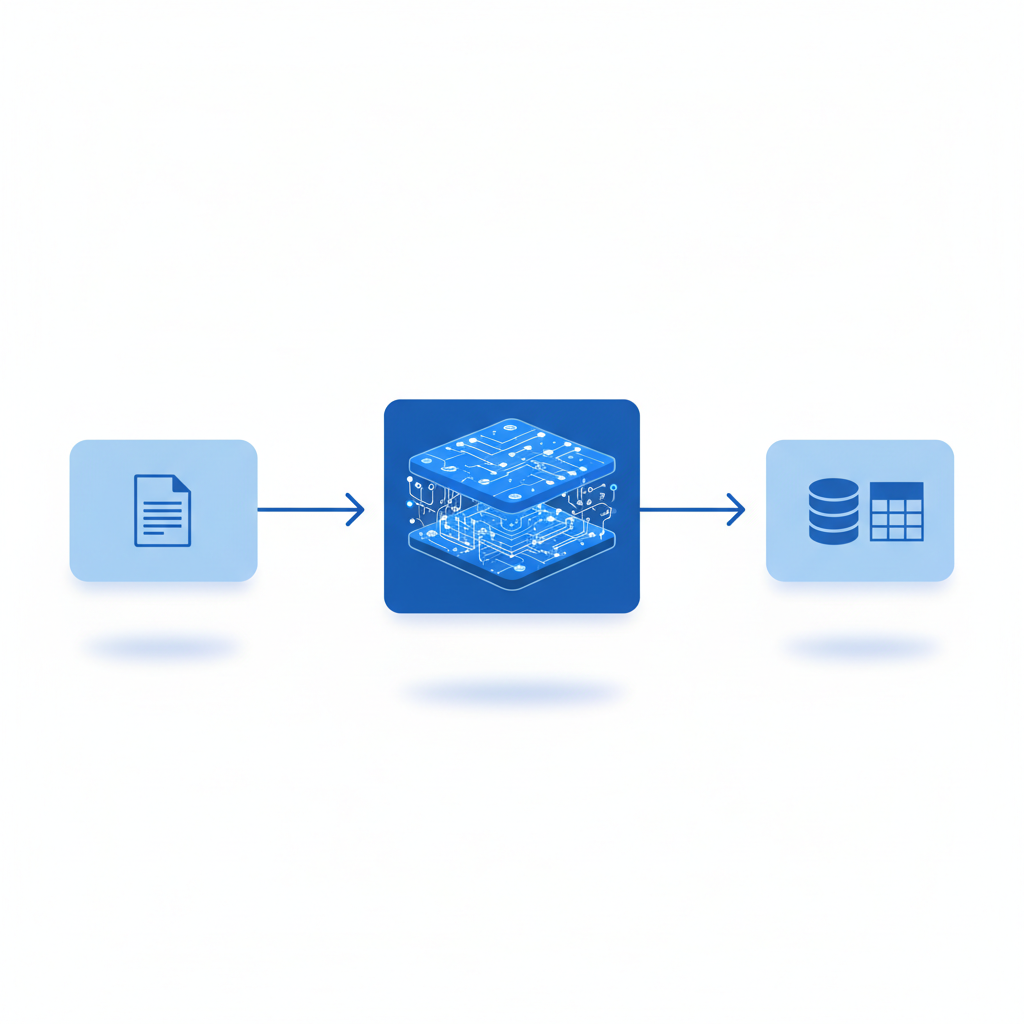
AI invoice extraction represents a fundamental technological leap. Unlike traditional OCR, machine learning models understand document structure and context, delivering unprecedented accuracy.
Multi-Model Consensus: The Game-Changing Methodology
Our advanced approach uses 3-5 AI models to analyze each invoice:
- Multiple independent model analysis
- Cross-validation of extraction results
- Sophisticated error-checking mechanisms
- Consensus-driven output
This methodology allows us to consistently achieve 99.9% accuracy across diverse document types.
Real-World Accuracy Impact
The difference between 85% and 99% accuracy isn't just a number—it represents significant operational improvements:
| Accuracy Level | Manual Review Time | Annual Correction Hours |
|---|---|---|
| 85% Accuracy | ~2 hours/month | 24+ hours |
| 99% Accuracy | ~10 minutes/month | 2 hours |
Hidden Benefits of High-Accuracy Invoice Processing
- Faster payment cycles
- Improved vendor relationships
- Reduced compliance risks
- Minimized duplicate payment potential
Choosing the Right Invoice Extraction Solution
When evaluating invoice automation technologies, consider:
- Multilanguage support
- Adaptability to various document formats
- Speed of implementation
- Accuracy measurement methodology
Conclusion: The Future of Invoice Data Extraction
As businesses increasingly demand efficiency, AI-powered invoice extraction represents the new standard in document processing. The era of manual data entry is ending, replaced by intelligent, context-aware technologies that deliver unprecedented accuracy and operational efficiency.
Target keywords: invoice OCR, AI invoice extraction, document processing accuracy
By embracing advanced AI extraction, organizations can transform accounts payable from a cost center into a strategic operational advantage.